Wednesday, March 17, 2021

Full Metal Milieu: Neighborhood

There are just these things that happen in American Movies, TV shows, and Comic Books.

Evil Aliens, Supervillains, and monstrous Monsters all seem to have it out for noted landmarks. You can't have a spaceship land in California and not have it pass by the Golden Gate Bridge. Likewise, the army of extraterrestrials invaders is going to have to battle the Superhero team in Times Square, Grand Central Station, or possibly in the air over the Empire State Building. Why else fight in New York? You don't a lot of battles at Hoover Dam but when you do you can be sure it's going to be a doozy. 

Teenagers do crazy stuff like drag racing the family car, make two romantic dates for the same night, and participate in school spirit events like cheerleading and sports. I guess. Honestly I live in New York City and I'm a geek. I have no idea what normal middle American teenager do. 

The point is...American films have their tropes and cliches tied to Americana and the cultures and traditions of the United States. We have our, Japan has theirs. 


My previous post addresses Japanese Anime/Manga settings with a very general, wide scope lens. With this post, we get close-up and take a look at some details that tend to show up in a good number of series. Not all of the bits I'm going to mention are going to fit in with your particular campaign, maybe none will given its specific contents and context, but these are elements often seen in a wide variety of stories. 

Neo-Tokyo

Tokyo, capital of Japan, is arguably the most world renowned and prosperous prefecture in Japan. A port city at the edge of Tokyo Bay, the city is to Japan what New York is to the United States - the primary target for giant monsters, mad scientists, and would-be world or universe conquerors. 

'Open 24 hours' like it's America cousin 'The Big Apple', Tokyo has a history of appearances across Japanese pop culture entertainment. It is the favored destination of Gojira (Godzilla), the location of the Metropolitan Police Department's 2nd Special Vehicles Section in Patlabor, and of course the central focal point of Tokyo Ghoul, Tenchi in Tokyo, and Tokyo Babylon.

It might interest some of you to know that the population of the 'city' of Tokyo and its 23 wards or districts is 9.7 million as of 2020 estimates. The nearest, next largest populations are in Yokohama at 3.8 million and Osaka at 2.8 million. Tokyo has more than double and a half times the number of people as its closest rival!

Tower of God

In the Shiba-koen District of Minato, Tokyo, there is a 332.9 meter tall (1092 ft.) replica of France's Eiffel Tower used primarily as a communications antenna and observation post. It is an extremely popular tourist attraction, bringing in sizeable income thanks to an influx of three million visitors each year.
 

Tokyo Tower as it appears in Tokyo Babylon
Art by CLAMP


In Anime and Manga, Tokyo Tower appears all the time, across numerous series, in genres ranging from horror, to romance, to modern and near-future Mecha stories. As Tokyo Tower was completed in 1958, it has been appearing in Anime and Manga stories for nearly as long as there has been Anime and Manga. 

In addition to being an impressive and easily identifiable location, making it an excellent backdrop for battles in the skies over Tokyo, the observation decks - located at 490 ft. and 819 ft. respectively - are common sites for teenage romantic meet-ups. 

Summer Wars

Episodes/installments in which the characters go to the Beach or visit Hot Springs are prevalent in a great many Anime and Manga, especially those focused on modern times. It is not unknown to see this is period series though, as Japan's Hot Springs have been a draw to those trying to cleanse the mind and body for many centuries. 

The Beach Episode gets first mention: it is not about anything culturally Japanese per se, except that it allows the artists, animators, and producers to show their characters with a lot more skin - the guys are all shirtless, the gals in bikini swimsuits, and such. Beach episodes are usually announced in advanced as if they are particularly special events 'you won't want to miss'. It is a merchandising opportunity for the show as well - how many figures can you produce of a character in her same-every-episode sailor suit or battle dress? Now fans will be clamoring for 'One-Piece Yellow Bathing Suit Yuki-Chan'!

Hot Springs, known as Onsen in Japanese, are naturally heated pools, geothermally heated groundwater that comes up through the Earth's crust. Japan has a large number that are at a safe temperature for bathing and resort/spas have been built around them. It is a popular vacation destination for Japan citizens and visitors alike, with many just many a day trip out of it. 


The Heroines of My Hero Academia
hanging at a Hot Spring


Like Beach Episodes, Hot Spring Episodes are often an excuse for Fanservice - most hot spring patrons go in naked, wearing a towel and from the changing areas but otherwise going bare. In Anime and Manga, strategic and often extremely clever use of towels, furniture, steam, and of course the water itself are used to hide the characters' most private particulars. 

That said, at some point one character will likely see another naked even if the audience (the Anime viewer or Manga reader) doesn't actually see anything. This most often occurs accidentally, though the Undisciplined Character may be actively trying to catch a glimpse of the boys or girls across the way. At resorts the baths/pools are usually separately by a wall of some kind with males on one side and females on the other.

A variant on this is the Public Bathhouse, usually only seen in Anime/Manga where a previous episodes battle has somehow damaged the plumbing/water supply at the characters' home, forcing them to use the Public facilities. 

In all these cases, taking the characters out of their normal environment and letting them relax gives them a breaking from intergalactic invasions and ghost stomping to get to know each other better. Some of the best Beach and Hot Springs episodes further romantic plots or subplots, add a touch of comedy to an otherwise dramatic series, or a touch of personal drama to an otherwise comedic one. 

One last note - while not common, the Beach/Hot Springs Episode can have a plot/action sequence all its own. The Summer, not the Fall, is the time of telling scary stories and a bit of horror (or horror mixed with humor) at a Hot Spring resort adds an additional layer to the outing. 

The Wind Rises


Anime and Manga characters seem to spend a lot of time on rooftops. Whether it's their own house or the roof of their school, there seems to be no place like the top of a place for dramatic confrontations, epic one-on-one battles, or just a moment of peace.

It is a common sight in many, many series - a teen climbs out of their bedroom window to sit on the roof of their house to be alone with their thoughts or feelings. Before long, one or more other characters are sitting right up there with them. This is sometimes comically exaggerated so what begins with just two people on the roof - a parent and child, a [possible] romantic couple - ends with the top of the house hosting the entire regular cast and a half dozen reoccurring secondary characters as well. One common gag trope is to find someone up there who is very old and normally couldn't have gotten up onto the roof by themselves. Another is a character who seems to have been up there during the entirety of the original duo's conversation even though they weren't 'on camera' until the moment they speak or otherwise reveal themselves. 

Alternatively, a male or female character goes to the rooftop of their school after making a fool out of themselves in front of their crush and the next thing you know 'Senpai'* comes up there looking for them. Oh my goodness! Senpai noticed you! 

School rooftops allow for unobstructed martial arts combat and for planning your bands next gig or discussing the details of the mystery you're investigating. Curiously, this is an Anime and Manga trope but not something actually done by Japanese kids. Most school roofs are closed and no one is allowed up there without supervision or special permission. Over the past couple of decades it has been more and more common to have small greenhouses or vegetable gardens growing up there but it is still well regulated. 

One of the big reasons it became popular in Anime and Manga is because it is comparatively easier to draw then say a crowd scene on a busy streets of Tokyo or Yokohama. Staging a scene against open sky, a few fences, maybe a wall, allows the reader to focus on the characters and let the background fade into the...um...background. 

Well this post took much longer than anticipated due to unforeseen real world circumstances. I am way behind for the month and don't know if I'll be able to catch up but rest assured, this is still a subject I am interested in pursing. I have a lot more to say on the subject and some very specific ways I want to apply what I am coming up with. 

Until next time...

AD
Barking Alien

*Senpai is a term meaning 'Senior', as in senior student or upperclassman. It can also refer to anyone older that a younger person looks up to or idolizes.



Thursday, March 11, 2021

Full Metal Milieu

 Let's talk about Setting.


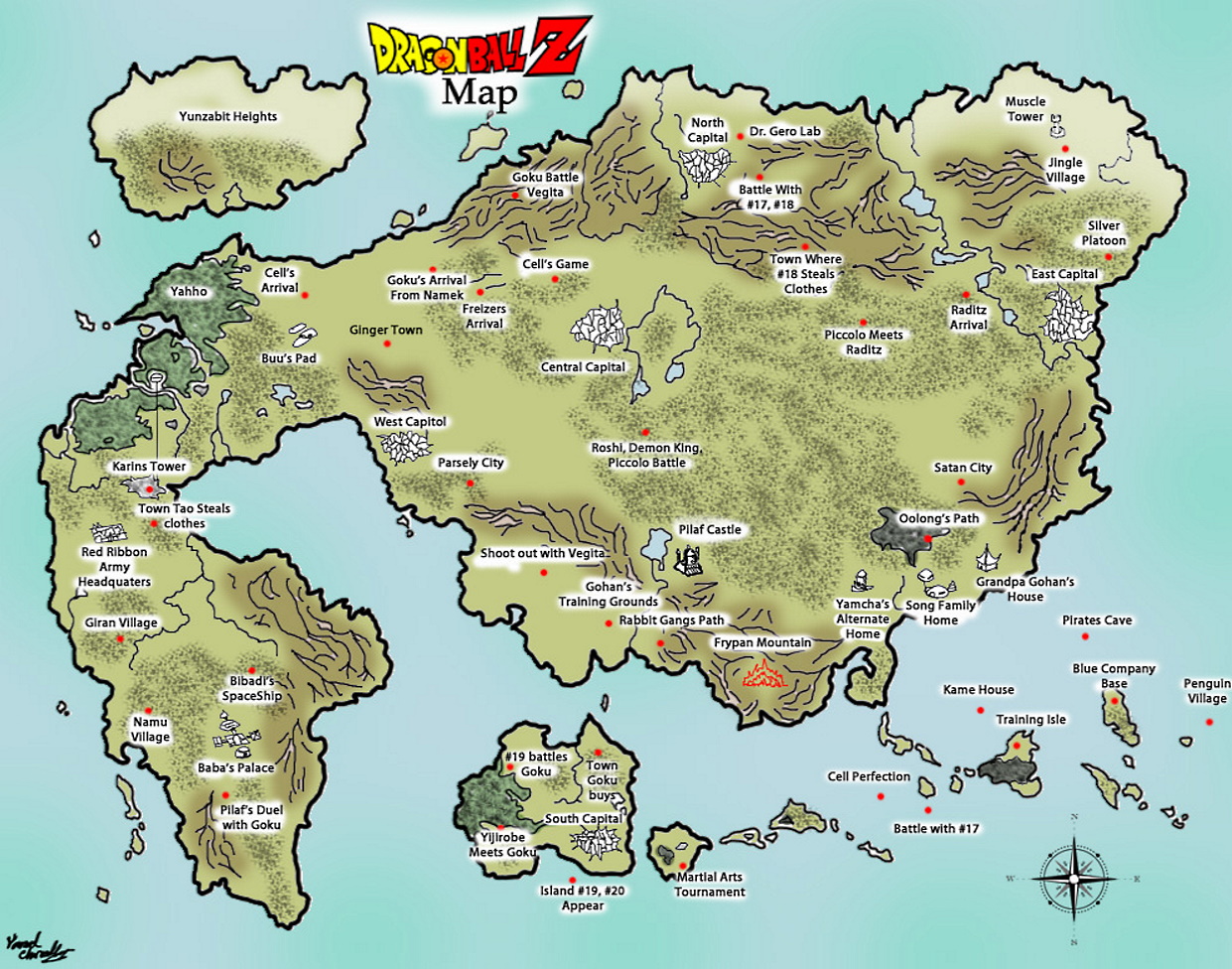
Map of the 'Earth'
from the various Dragonball series


I am definitely a Worldbuilding Gamemaster; someone who personally enjoys and is known for the development of a fictional setting within which a given fiction takes place. I love running games that have cool and interesting settings and although both 'cool' and 'interesting' are matters of personal preference, many of my players over the years have remarked that they liked and appreciated the way I have handled the settings of the games I've run. 

Now I will be the first to say that it's pretty easy to be good at Worldbuilding when you're running Star Trek, Star Wars, or another well known IP. Most if not all of the heavy lifting has already been done for me. This is no less true if I am running a campaign set in the universe of Mobile Suit Gundam's One Year War or the superheroic future of My Hero Academia. I don't have to come up with how the world works. We've seen how it works. We all watched the same episodes.


Map of the Earth Sphere during 'The One Year War'
from Mobile Suit Gundam


Except...sometimes all of us haven't. I have often come across the situation wherein I have seen all of the Gundam series set in the Universal Century timeline and not everyone else has. Another common scenario is one in which I want to run a game based on, let's say, Five Star Stories or Aura Battler Dunbine, and everyone says yes to this, only to find out that most of the players are largely unfamiliar with the chosen series. Now, although my job as setting developer is made easier by the extensive materials published in Japan for pretty much every Anime series they produce, the tricky task of being able to convey that setting to my players becomes key. They may not know any more about the world of a given Anime than they would about an original setting of my own creation. 

That of course is the holy grail, the great experiment - Worldbuilding your own Anime/Manga setting! How does one create a milieu of their own with the proper Japanese Pop Culture Entertainment flavor and feel? 

Like my first post on Characters, this entry is going to paint in broad strokes and get into the nitty gritty in the follow-up. What I want to discuss here are the elements that a great many Anime and Manga settings share 

Now and Then, Here and There

The vast majority of Anime and Manga series take place on Earth, not unlike the vast majority of Western fiction. Much like the trend that most Superheroes live in New York City developed because the big comic book publishers were in NY, so too did most Anime feature action in and around Tokyo, the location of most animation and manga studios.

At the same time, Japan is structured differently from the US and their entertainment media is applied differently as well. It was not uncommon, even in the early days of Anime and Manga, to see stories set in what we would refer to as rural or suburban areas. Each prefecture has its own geography and character and often the creators of Japanese entertainment worked in their hometowns or used iconic locations that would be easily identified by anyone of Japanese citizenship - Mount Fuji, Tokyo Tower, Aokigahara (the so-called 'Sea of Trees'). 

Historic fiction and folktale based or inspired works have been a staple of Japanese Anime and Manga for a long time, giving us glimpses into Japan's past. Samurai films, Anime, and Manga, from the works of Akira Kurosawa to Kazuo Koike and Goseki Kojima of Lone Wolf and Cub fame have given us tales that clearly take place on Earth, in a very particular place and time. 

The distant past and far future are common subjects in Anime and Manga, all taking place on an otherwise normal, recognizable, and believable Earth. The setting has familiarity and weight because it is our Earth, albeit with the fantastic elements of the stories thrown into it. I will go into more detail on Anime/Manga futures and pasts later in the month when I do posts focused on Science Fiction and Fantasy respectively.

However, there is another idea that is both very familiar to gamers and yet very Japanese that I'd like to address first...

Hello World


The Pokemon World
It's Earth...but is it?


A number of very popular Anime and Manga take place on an Earth we surely wouldn't recognize. These settings, much like the Alternate or Parallel Earths of Science Fiction and Superhero Comics, TV, and Films are far more varied and indeed less clearly the world we know than their Western fiction counterparts. At the same time - and this is what makes it uniquely Japanese - they are never referred to specifically as a Parallel or Alternate universe. 

Dragonball (and its follow-ups), Pokemon, and Hunter x Hunter all take place on Earth. It is never stated that these series take place on a 'different' Earth or that it is another planet entirely. They take place on Earth, just not our Earth. 

Now I have a theory about this, though I do not understand the culture and psychology of modern Japan well or deeply enough to make any sort of claim of what is going on here. What I have is just a thought based on what I've seen and heard, nothing more and nothing less:

WARNING: Recorded in Minimum Setting Rant Mode:

It would seem that the Japanese fan community is less likely to deconstruct things than their Western (especially American and British) counterparts. In Japan, a setting just is what it is. They absorb a series and its universe without searching for some greater, conspiratorial reason things work the way they do or assuming the creator made mistakes and immersion breaking inconsistencies in their own work. 

Even I am guilty of entertaining the idea of a dark origin behind the Pokemon universe. One in which the reason for all the identical kids, Officer Jennys, and Nurse Joys is that they're clones, needed to replace a Human population wiped out by the arrival of Pokemon. 

That doesn't occur to the average Japanese Pokemon fan. No, it seems instead they see the many Jennys and Joys and think, 'Ha! What a quirky, fun gag to add detail to this show I love.'
 
Westerners want to show how smart they are by pointing out all the flaws in creative ideas until they render them sad and unfun. Aren't we just so clever?

Another trope common to Anime and Manga worldbuilding...

Time Bokan

Time travel was, for a very long while, fairly rare in Japanese pop culture but present nonetheless. The various theories we see in Hollywood films and Western Science Fiction and Fantasy are all on display, though it would be seem Japanese temporal castaways are more inclined to mess with events than the ultra-wary chrononauts of the Western world. This goes all the way back to Doraemon, who traveled back in time from the 22nd Century to aid young Nobita Nobi in the 20th (Manga first published in 1970. Short anime series in 1973, followed by a much more popular one in 2005). 


Doraemon!
My favorite blue robotic cat from the future with no ears. 


While straight forward Time Travel isn't all that different in Japan than it is anywhere else (blue robot cats aside), there is something much more distantly Anime/Manga related that I want to talk about; anachronisms.

Anachronisms are very common in Anime and Manga settings and much like a very strange Earth just being viewed as Earth, most of these anachronisms go unmentioned. Usually they appear in the form of some technology that was not available in the time period being depicted or a standard form of technology that is clearly missing, though this is less common. 

Examples include Black Bulter, ostensibly set in 1888 London, shows a maid washing clothes in a washing machine, video games seem to exist, and other modern technology such as cell phones are seen in the possession of some villainous types. As the series progresses this happens less and less though certain characters can gain access to technology too advanced for the time by making deals with demons (which may also explain some of the earlier anachronisms). 

Fullmetal Alchemist appears to be set in a Fantasy version of the late 19th or early 20th century, though periodically things such as steampunk-esque prosthetics ('Automail') and other machinery will appear that fit better into later eras. 

Pokemon and Soul Eater both feature towns and people that seem out of time. In Pokemon we encounter someone who dresses like a early period Samurai, though the Pokemon World is clearly modern with occasional examples are future tech such as the Pokeballs themselves. Soul Eater characters stop by Medieval towns, then go to a Polish village where they see Golems, then travel to modern Italy, Venice, and America. 

Sometimes it's explained and part of the story behind what is going on in the series. Quite often though, it just is, a fixture of setting that is largely as aesthetic choice of the creator. The American equivalent would be the the Batman Animated Series by Paul Dini and Bruce Tim. What that set in modern times, the 1930s, or some strange art deco universe all its own?

Finally, sometimes you just need a world of your own...

The Magnificent World

Many Fantasy stories and a good number of Science Fiction tales are set on other worlds far beyond our Earth. Be it an alien planet or a 'Oz'-like alternate dimension, other realms abound in Anime and Manga as they do elsewhere. 


The World of One Piece


Some worlds are indeed wholly different planets, the setting of the Anime/Manga in question where the different culture, terrain, and history are a key part of the story and the characters within it. One Piece is among the best examples of this that I can think of, with Five Star Stories another and one a absolutely love.

A very common, very popular trope of this is having one or more normal teenagers or others from our world transported to this strange, other place and possibly trapped them, unable to return. This has become increasingly popular in recent years, being identified by the Japanese as its own genre or at least sub-genre of Fantasy known as Isekai. Isekai translates as 'different world' or 'other world'. 

The 'Transported to Another World' concept has been a part of Anime and Manga for a very long time, with the classic Fantasy Mecha series Aura Battler Dunbine being among the early Isekai shows (and indeed a favorite of mine). Young Sho Zama has an accident during a motorcycle race that sends him down a hole and into the Medieval realm of Byston Well. 

Other well known examples of this genre include Kagome's travel to and from ancient Japan in Inu Yasha, the three main protagonists of El Hazard: The Magnificent World, Rising of the Shield Hero, and another fave of mine, The Vision of Escaflowne. 

A major trend is to see the characters transplanted from Earth to a Fantasy world with very video game and/or RPG laws and mechanics. Variations include someone dying on Earth and being reborn into this Medieval Fantasy universe or being trapped inside an actual game by some peculiar means. Often winning the game or defeating some key element of it is the ticket to returning home. 

The Devil is a Part-Timer flips the scenario, with the Devil trapped here on Earth. 

Like the previous posts, I could go on and on with this subject but for now I do believe this is enough. I still have a lot of other material to get to and I am running way behind schedule. In the next post I will touch upon some famous/infamous setting cliches and tropes you might want to include in your Anime/Manga game so that it feels even more like a real series from Japan.

After all, if Japanese Manga writers use these tropes, why shouldn't you?

AD
Barking Alien


Friday, March 5, 2021

Japan's Bizarre Adventures - PART II

It's GM Appreciation Day today and I just want to say, I appreciate you!

Yes you! All of you; whether you run things the way I do or completely differently. If you enjoy a more narrative, story driven style or have a more tactical, boardgame/wargame approach, I salute you! I don't care what you're running either, be it classic Traveller or the newest indie game, just know that I appreciate you.

Unless you run D&D. Then you're a DM not a GM and have to go fend for yourself. Run along now, there is no love for you here. Wait...what? Really? *Sigh* Very well. Barkley informs me that DM are technically GMs as well so I suppose I can through some appreciation your way. 

Just don't get used it. ;P

Back to Anime/Manga RPGing...

Now that we've coated the canvas and painted on the Anime/Manga style with a few broad strokes, it's time to go in and add some details. A little color here, a touch of texture there...What's the Anime equivalent of Bob Ross' 'Happy Trees'? Happy Kaiju? Oh well, it's time to talk tropes.

While the various genres within the Anime/Manga medium each have tropes of their own, right now I'm still going to paint a bit broadly after all and cover things we see in nearly every series.

Characters


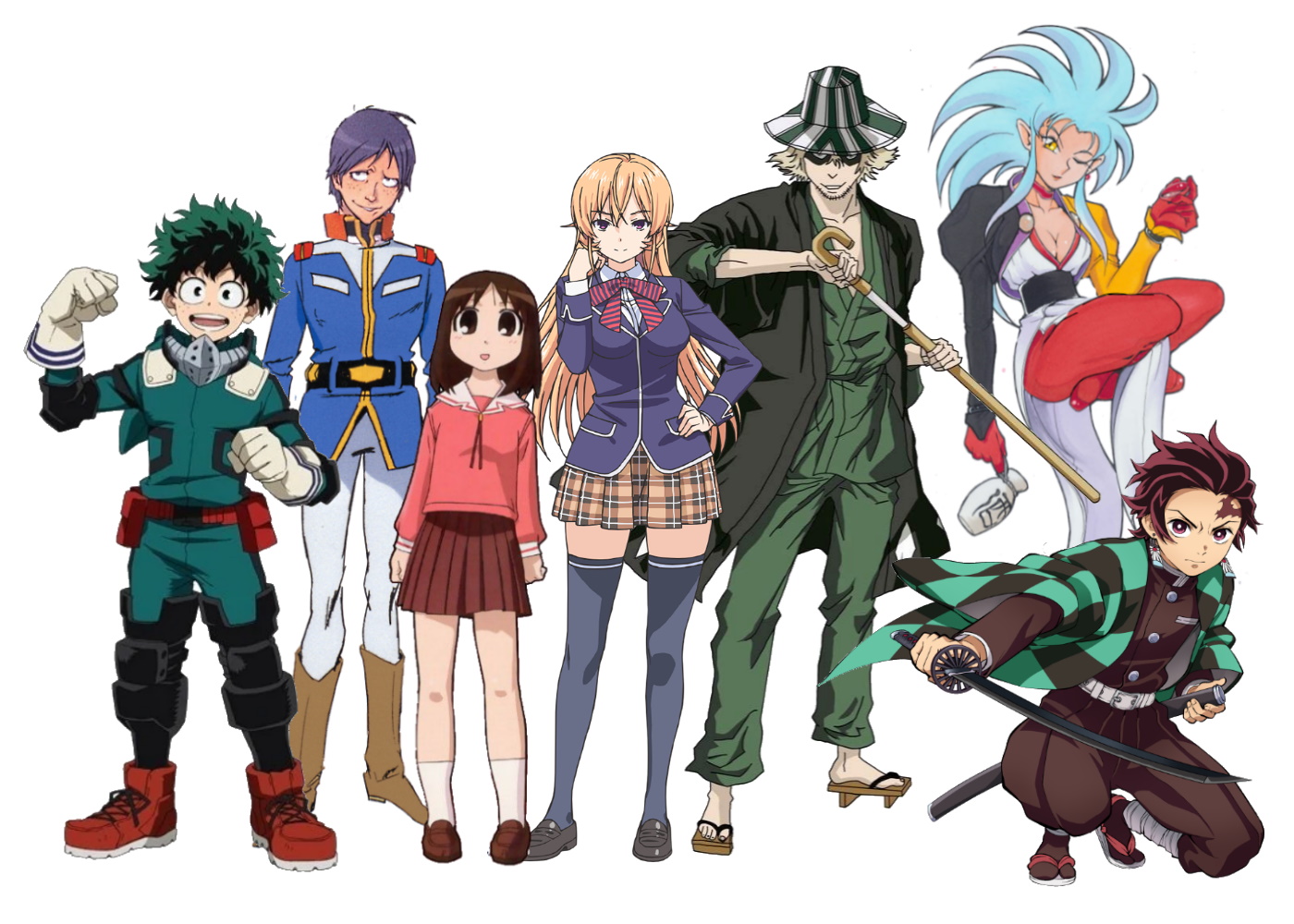
Anime and Manga characters generally fall into one of a large number of archetypes. Several of the names given to these archetypes were coined as they relate (primarily) to romantic interests as that is a popular plot element or subplot regardless of the type of series you're following. I will talk more about Anime/Manga Romance and Comedy in greater detail in an upcoming post. 

I guess it needs to be said that no, these are not the only types of characters you will ever see and no, it isn't impossible to twist a cliche and turn it on its head. In fact, I am not detailing anywhere near the complete list of every standard character type seen throughout the history of Anime. That would be ridiculous, making this post ten times longer than it already will be. These are simply the types of characters you see most often that lend themselves to being used as Player Character in tabletop RPGs. 

I would argue that the best Anime/Manga characters are actually some combination of these archetypes. Furthermore, while I hope this post is helpful, the best way to get to know the types of characters you encounter in Anime and Manga is to watch Anime and read Manga. 

Your mileage my vary. 

The Anxious Hero Character: This is a very popular character type in Anime and Manga that, while not uniquely Japanese, is certainly seen more often there than in traditional Western Adventure stories. In the US and elsewhere, the hero is universally brave, tough, and confident. He (it's usually a he isn't it?) gets by on his good looks, mean right hook, and being good at practically everything he does exactly when he needs to be. 

The Anxious Hero is the opposite of this in many ways. This character lacks confidence, isn't particularly good at anything at first, might be clumsy as a result of being nervous, doesn't want to fight, and often has not desire to get involved in the craziness going on around them at all. By interacting with the other characters they develop friendships, a much needed sense of confidence, and the ability to pull through and save the day. 

I would say from my own personal experience as a GM, this is the toughest one to see realized at a gaming table. Western gamers, generally speaking, have trouble playing a lack of confidence. They never want their characters to appear frightened, unsure, or unprepared. If someone gets it, gets the concept of this character, then they will usually shine in an Anime/Manga themed game.

There are numerous variations of this character and for those in the Anime/Manga know, both Shinji of Evangelion and Deku of My Hero Academia show traits of this character type, yet those are two very different characters. 

The Arrogant Character: Referred to in Japan as the Himedere (female) and Oujidere (male), these characters see themselves as Princesses and Princes and expect everyone to treat them as such. Common traits attached to these types are them being actual royalty or nobility, exceptionally wealthy, the children of well connected and/or famous people or being famous themselves (they are actors or pop stars). A variant on this is the Kamidere or 'The God Complex Character' who believe themselves exceptional in all ways and superior to everyone else just because they are them. Both of these character types are more commonly villains than heroes but in some instances they may be seen as anti-heroes (such as the main character in the series Death Note). 

The Cynical Character: This character is cold, hard-hearted, blunt, and sometimes may include traits such as arrogance and a biting sense of sarcastic humor. Other times, the character is more quiet and aloof. Their cold demeanor can make them seem emotionless and unfeeling but in truth they are shielding themselves and hiding a deep caring for family, friends, and their significant other or crush. 

A notable variation on this archetype is the Hinedere, whose cynical world view comes with a high level of arrogance. 

The Disciplined Character: Serious, focused, no nonsense and often staring down their nose at the more undisciplined in the group, this character tends to have dark hair, glaring dark eyes, and glasses are not uncommon. Proper discipline in all things is key with this character. Here is someone who knows the proper procedures, protocols, and rules and follows them. In school settings this is your Class President, often a member of the archery, fencing, or kendo club. Chess is usually their game of choice most. 

A variation of this is The Dedicated Character who shares many of the attributes of the Disciplined one but is more focused on a single thing. A Scientist, a Corporate or Government Middle Management person, and the Captain of the Swim Team are all good examples of this character archetype.

Sometimes, though not often, there is a little of the next character type mixed in. 

The Energetic Character: More often female than male, nearly always young, this character is active, positive, and looks to encourage everyone and brighten their day. In school settings they head up class project because they enjoy the excitement and camaraderie, not necessarily because they are acing their classes. Likewise they join after cool clubs and participate in sports, those not because they are (initially) good at the subject or sport in question.

The Loveable Buffon/Ditz Character: Bakadere are not too bright, often clumsy, and usually lack a degree of common sense. They may be spacey/ditzy or simply none to clever. Universally these characters are also sweet, kind, innocent, and truly good. They mean well above all else and are very loyal and trustworthy, although easily tricked or fooled. Some are childish or immature for their age while others are merely not what you would call 'worldly'. In addition to their overall good nature they are often carefree and optimistic. 

A popular variation is to see the character as one of the other, less-extreme archetypes most of the time and they only become Bakadere in the presence of their crush or a beloved mentor or celebrity. 

The Undisciplined Character: Often lazy when not partying, prone to excessive drinking, fighting, gambling, and other hedonistic or scoundrel-like activities, this character is a hot-tempered but often well meaning troublemaker. The two variations on this archetype seen most often are the Dameko - whose vices and exploits often burden and complicate the lives of their friends and loved ones - and the Hetare - who need constant support from those that care about them so they remember to do things like wake up and go to work, bath, or generally function like the average person. The Dameko is often good at what they do while the Hetare lack even basic life skills. 

As noted early on in this post, there are dozens and dozens more archetypes, some describing more specific, niche personalities, others specifically aimed at antagonists, and still others are less about personality or mindset and more types of characters one might encounter.

For example, the Nisetoshi is a ancient character, often hundreds or even thousands of years old, who looks and acts young and even immature. They will periodically reveal their true nature by dropping deep knowledge or wisdom. This doesn't tell you anything about their personality really, as that can vary greatly. 

The Chunibyo is a character who claims to possess special, often supernormal abilities. They dress eccentrically, may have odd looking eyes or hair, and effect a peculiar speech pattern. Often they actually do have abnormal abilities but it should be in question for a while before they are revealed. 

Chugokujyo are garbed in traditional Chinese dresses, often end sentences with 'aru', and are prone to knowing martial arts. They need not actually be Chinese, though many are. Chun-Li of the Streetfighter video game franchise and Shampoo of Ranma 1/2 fall into this category. Again, both fit the bill but are very different characters personality-wise. 

FINAL UPDATED EDIT: I have been writing and rewriting this Campaigns I Have Known post for four days now and I can not for the life of me get it the way I want it. I am just going to stop for now. It is taking too much of my time and delaying further exploration of the subject. I will get back to it at a later time. 

My apologies everyone. 

AD
Barking Alien


Wednesday, March 3, 2021

Japan's Bizarre Adventures - PART I

 Let's start by addressing the 3600 ft., 18,000,000 ton, transforming city/starship/robot in the room; What is an Anime/Manga themed Role-Playing Game?


Simply put, it's a tabletop RPG game - be it a single adventure, a system, or a campaign - that has features inspired by Japanese Manga (Sequential Art - Comic Books) and/or Anime (Animated Cartoons on TV or in Film format).

This can range from the types of characters, technology, monsters, and such that appear in these mediums to stories made in the style of Japanese pop culture fiction. These stories often feature genre conventions and tropes quite different from those typically seen in the majority of similar productions in the West. 

So far so good, yes? Even if the above explanation is a tad academic, it's good to begin with a straightforward and concise understanding of what we're going to be talking about. The thing is, the information above is probably not anything you don't already know. The key question isn't 'What is an Anime/Manga game?' but 'How do you make a game feel Anime/Manga inspired or themed?'.

One of the first things to come to terms with is that Anime and Manga aren't really genres. They are a means of depicting a genre with stylistic elements specific to those mediums. Mobile Suit Gundam (the original anyway) is a Science Fiction War Story. Ranma 1/2 and Urusei Yatsura are Fantasy/Sci-Fi Romantic Action-Comedies. Record of the Lodoss War and Goblin Slayer are Western Fantasy. All of these are Anime/Manga however and share some elements tied to those particular means of telling stories. 

Japanese cultural components appear in many Anime and Manga stories and they can be both confusing to the Western viewer but also really helpful in enforcing the feel and atmosphere of the medium. At the same time, I am not going to go into all those details here. This post is directed at the broad strokes. At the same time, I am going to give alternatives to many of the assumed cliches.

The Heroes Are Young

The protagonists of most Anime/Manga stories are often pre-teens to teenagers, even if their age would - in the minds of most Westerners - make their role in the story seem illogical. For example, Ash Catchem (Satoshi in Japan) of Pokemon fame is only 10 years old when he begins a cross-country journey all by himself to catch Pokemon and become a championship trainer. The pilots of the EVA units in Neon Genesis Evangelion are all 14. 

The main reason for this is the same one that introduced teen sidekicks to Comic Book Superheroes in the West - the audience is generally comprised of kids who are in the age groups of the main characters and want to see themselves in the heroes and their universes. Simply put, a series with 12-15 year old protagonists is likely aimed at 12-15 years olds. 

Of course this is not always the case and indeed wasn't the case at all in the 'Silver Age' of Anime and Manga. Captain Harlock, The Dirty Pair, Lupin the III, and many other classic characters are very much young adults to full on grown-ups. Likewise, the base audience for Evangelion tracked much older, as many of the themes in that series would not be familiar to high school age children. 

When running an Anime/Manga game based on the current style of the medium, assume your PCs will be between 8-14 unless the setting calls for them to be older. It's not unlike Tales from the Loop and Things from the Flood in that regard. 

The Setting Dictates the Specifics

Related to and expanding the aforementioned particulars of age, there is often but not always a setting reason why the characters are kids. Perhaps children has an imagination and psychic resonance we lose as we group up. Maybe they are the only one's presently conscious when a giant alien monster attacks and the experimental mecha tuned themselves to the teens when they give into them; unfortunately for everyone involved they won't work for anyone else now. Why are the kids in My Hero Academia so young? Why are the Harry Potter characters so young? Dude, it's a story about people in middle and high school!

Also of note regarding the mandates of setting is the autonomy of the PCs and whether or not they are treated like normal young people of their age. The characters of My Hero Academia are in high school, have to attend classes and school events, and can't use their powers to fight crime yet unless it is approved by senior, pro-heroes. On the other hand, Ash, Misty, and Brock (Satoshi, Kasumi, and Takeshi) can wander the Sinnoh Region, a land roughly the size of the Japanese island of Hokkaido (which it is patterned after) completely unsupervised, going where ever they want and doing whatever they wish.*

GMs should consider what their campaign world deems 'normal' and convey that to the players. Again, and I can't stress this enough, not what Our Real World deems normal but what is standard practice for the setting. 

It's Not About The Giant Robot

Unless of course it is...but more on that later. 

The main thing to remember about Japanese pop culture entertainment is that the Giant Robot battles, Magical Girls vs. Darkness, and Demon Slaying Samurai is all a backdrop for the real story; tales of friendship, romance, determination, duty, the futility of war, environmental themes, and other emotional and philosophical concepts closely connected to not only Japanese culture but the Human condition.

There is a reason Japanese Anime and Manga, a thing wholly and strongly tied to a particular place and people, has become beloved by fans the world over. Almost regardless of who you are and where you're from you are bound to understand the ideals being fought for by the heroes of this medium. We all love, we all get jealous that he likes her more than us, we all want to fight injustice and protect those we care about, and we all love cute creatures that can zap our enemies with lightning bolts. OK, for some that last one is stronger than it is for others. 

The point is, your Anime/Manga campaign has Giant Robots or it has four and a half foot tall, teenage elf girls with six foot long swords. It isn't about those things. It's about people. It's about the characters, their belief, desires, goals and their situations. The rest of the tropes are there to make it 'look' cool in your head. 


More to come...

AD
Barking Alien


Monday, March 1, 2021

MARCH MECHA MANGA MADNESS MONTH!

I'm a huge fan of Giant Robots but...you knew that. 

If you didn't, if you're not a regular reader of this blog and aren't up to speed, I am. Really huge. I've been a Japanese Mecha Anime and Manga fan since before they made the mass transition overseas to Europe and the United States. Also, why aren't you a regular reader? Get to working on that!


Truth be told I love robots in general, from real life ones to Star Wars Droids, Data of Star Trek: The Next Generation, Wall*E, and so many that came before and after these iconic examples.

That said, there is a special place in my heart for what has come to be known as Mecha, the often gigantic, piloted, usually humanoid machines of Japanese pop culture entertainment. From Tetsujin-28* (Gigantor in the USA) to the Led Mirage of Five Star Stories and beyond, some in the shapes of beasts or more abstract designs, I find them fun, fascinating, and definitely game inspiring. 

The visuals, stories, and tropes of Mecha Anime/Manga - and Anime/Manga entertainment overall - always give me ideas for RPGs. The key thing about them, and the main thing casual observers seem to gloss over, is that the best and most interesting Mecha series defy or define their genre just as any other great work of fiction does.

Sure there are Mecha Anime and general Anime tropes but Gundam put them there, Evangelion twisted them, and Gurren Lagann redefined many aspects of how you tell a Mecha-oriented story. There are elements of Japanese pop culture entertainment we simply do not see here in the US or at least not in quite the same ways or at the same scales. The heart-warming fantasy of a Miyazaki film, the slice of life comedy of Azumanga Daioh, and the LGBTQ romantic action adventure of Revolutionary Girl Utena and not typical in Western entertainment, let alone Western RPGs. 

This month, I want to embrace that range of diverse approaches, explore new RPG campaigns ideas, and take a look at rule systems that might facilitate giving your game an Anime/Manga feel. And most of this will come with Giant Robots of course!

This March you can expect to see:
  • Discussions of what an Anime/Manga themed game is and how to tackle running one.
  • Campaigns I Have Known returns with tales of past Anime/Manga themed campaigns. 
  • Adding Mecha where they don't belong. I'm kidding of course - they belong everywhere!
  • My original, homebrewed Mecha Anime RPG MSV - Mecha System Variant.
  • Plus - More Yokai Hunters Society / Dice Fiction Edition.
  • And a number of Pokemon inspired game concepts.

Doesn't this sound wild? It sounds wild, right? Am I crazy? Is this even a good idea?

We'll have to wait and see...

AD
Barking Alien


Oh yes, I almost forgot...do you know what else is going on this month? Why it's the...


While I am not participating in this myself, I am totally going to be watching for cool robot art. 

P.S.: *Gigantor / Tetsujin-28, as well as Giant Robo, are not piloted! Both of these early Japanese Mecha are controlled by young boys with communicator watches. Neat, huh? Hmmm. May have to provide that as a game option...